
Safety lapses in Seoul marathon events lead to death of woman in her 20s and urban traffic paralysis
The SBS program "News Story" investigates safety management failures in the rapidly increasing number of marathon races, highlighted by the death of a woman in her 20s during a major marathon co-hosted by the Seoul Metropolitan Government this past October.
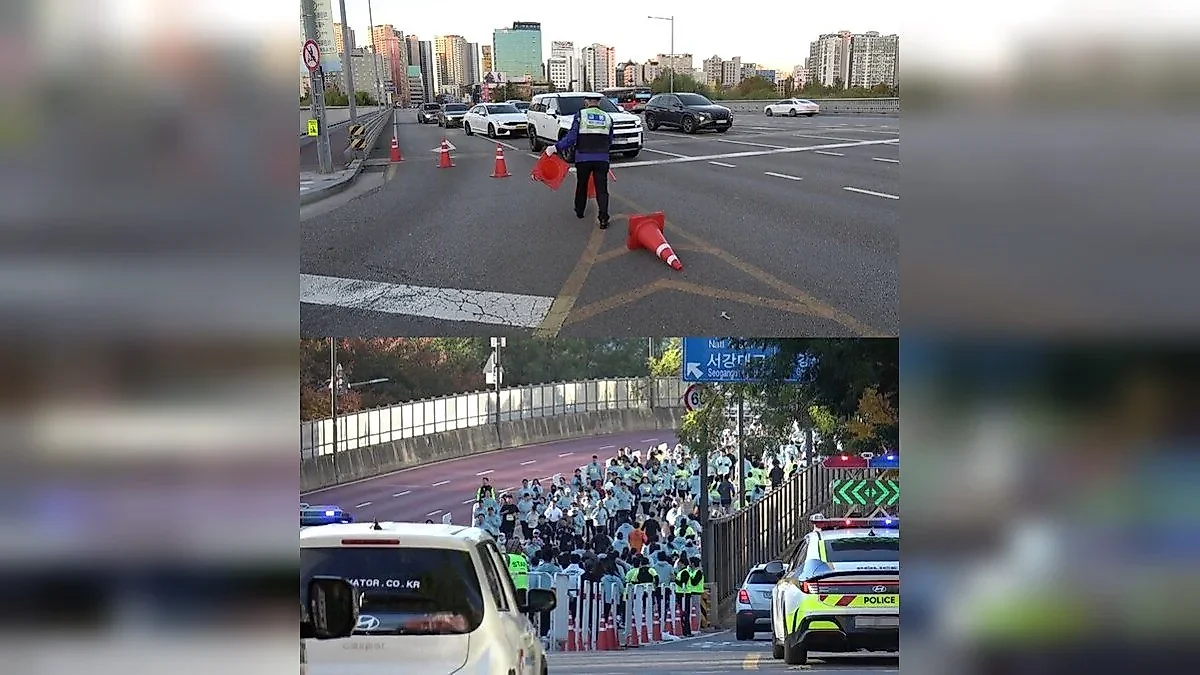
The marathon craze is striking back with runners collapsing and city roads becoming paralyzed.
Tragic accidents are occurring amidst the marathon boom. As the number of participants increases for health and achievement, a marathon craze is sweeping South Korea. However, as the number of races grows, small and large safety accidents are following in its wake. In a famous marathon co-hosted by the Seoul Metropolitan Government this past October, a woman in her 20s died. The individual, identified as Ms. Yoo, collapsed just 500m before the finish line. Data on the organizers' response by time slot obtained by SBS shows that the organizers' medical staff began cardiopulmonary resuscitation (CPR) more than 7 minutes after Ms. Yoo collapsed. According to the marathon manual from the Sports Safety Foundation, the golden time for a cardiac arrest patient is 4 minutes, raising questions about whether critical time to save a life was wasted. The investigation tracks what happened at the scene based on eyewitness testimonies.
The number of scheduled marathon races through the end of this year is approximately 600, more than double the amount from five years ago. While races are rapidly increasing following the marathon craze, concerns are rising that safety management and on-site operations are failing to keep pace. In fact, on the first Sunday of this past November alone, 9 marathons were held nationwide, including 3 in Seoul, simultaneously. Reporters visited one of these sites, where the start—scheduled for 7:30 AM—was significantly delayed, and dizzying situations were captured where people on unicycles suddenly cut through the runners, tangling with participants multiple times.
As marathon races increase, dissatisfaction among general citizens is also growing. Because races are held in various parts of the city almost every weekend, roads are controlled and city buses are diverted, causing significant inconvenience to the daily lives of citizens. The problem is that there are no proper institutional mechanisms to coordinate or limit these events despite the surge in races.
Following an amendment to the National Sports Promotion Act this past October, starting next April, organizers of sporting events with more than 1,000 participants must provide advance notice of their safety management plans to local governments. However, it has been pointed out that since this amendment focuses on strengthening safety management, it has limits in actually restricting the rapid proliferation of hosting such events.
To become a festival for everyone, certain elements are required. The marathon craze is not a phenomenon unique to South Korea; it is also highly popular in countries such as Germany, the United States, and Japan, where world-famous races have been held for a long time. Seo Ju-ho, a runner who has participated in famous domestic and international races including the Berlin, Chicago, and Boston Marathons, said he was impressed by the atmosphere abroad where not only participants but also citizens enjoy and cheer for the marathons. Yoo Sang-min, who resides in Germany and participated in the Berlin Marathon this year, also shared that marathons have established themselves as festivals enjoyed by the entire city rather than just participants. This is because, in Germany, thorough prior coordination is used to minimize inconvenience to citizens.
SBS "News Story" will broadcast on Saturday the 21st at 8:00 AM.
Copyright © SBS & SBSi. All rights reserved. Unauthorized reproduction, redistribution, and use for AI training is prohibited.

Covers K-pop for SPECIALTIMES GLOBAL, and also writes Culture and K-Variety stories.

Comments 0
Comments are currently disabled.