
Korean traditional masters face crisis as lineage of heritage disappears
The SBS program "News Story" examines the crisis facing Korea's intangible cultural heritage, where traditional masters struggle to pass down their crafts due to economic hardships.
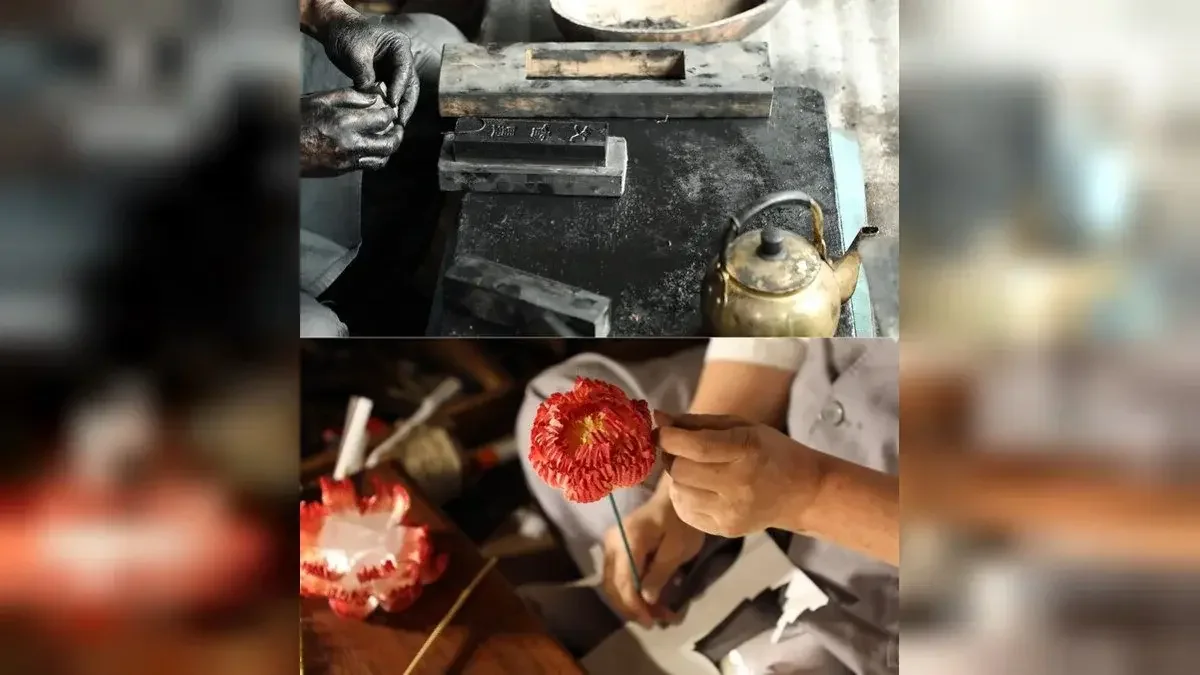
Traditional Korean technologies are at risk of being lost as 28 of the 54 National Intangible Cultural Heritage categories currently lack transmission instructors. In Eumseong, master Han Sang-muk spent 10 years restoring traditional soot ink, which requires kneading 10kg of soot 30,000 times, yet his disciples have all chosen different paths due to financial difficulties.
The lineage of K-masters is breaking... a crisis for Korean masters.
While K-culture attracts global attention, traditional technologies are disappearing. How can the K-luxury goods of K-masters be preserved?
The SBS program "News Story" looks into the reality of our intangible heritage, which is at risk of losing its lineage, and seeks practical solutions to maintain its existence.
As the film "KPOP DEMON HUNTERS: A SING-ALONG EVENT" achieves global success, Korean traditional culture—including traditional hats, norigae, and folk paintings—is receiving increased attention alongside the film. However, contrary to this brilliant interest, the intangible heritage that has protected our traditional culture is facing the risk of its lineage being severed due to a decreasing number of successors.
This is true K-luxury!
In Eumseong, Chungcheongbuk-do, there is master Han Sang-muk, the only person in Korea who produces traditional soot ink (songyeonmeok) using traditional methods. He struggled by traveling between China and Japan to revive traditional ink that had been lost for over 50 years, finally succeeding in the restoration of soot ink after 10 years. Soot ink is made from the soot produced when burning pine trees; even when burning 1 ton of pine, only about 10kg of soot can be obtained. This is mixed with natural glue made by boiling cowhide and cow bones, kneaded as many as 30,000 times to shape it, and then dried for anywhere from one year to as long as 20 years to complete a single piece of ink. However, the traditionally restored ink is once again at risk of losing its lineage. Although he has passed the technique down to several disciples, they have all chosen different paths because it is difficult to make a living.
"Jihwa," paper flowers made of traditional Hanji, is also facing difficulties. Jihwa is said to have been used in Buddhist offerings or in large and small banquets at royal courts and private homes since about 1,000 years ago. While many were once lost, Monk Seok-yong, a holder of the Gyeonggi Province intangible heritage for Jihwa, has restored 15 types of traditional Jihwa, and now about 30 types are being produced. After coloring the Hanji with natural dyes obtained from nature, such as sappanwood and gardenia, it is aged for about 100 days to ensure the color absorbs well. Then, depending on the type of flower, the paper is cut and folded hundreds of times to finally complete a single flower. It is a task that requires immense time and sincerity, taking anywhere from 4 months to over a year. However, there is not yet a single successor to follow Monk Seok-yong. The burden of material costs, such as Hanji and natural dyes, combined with the reality of having to work other jobs to make a living, makes succession difficult.
How can the K-luxury goods of K-masters be preserved?
In fact, among the 54 categories of National Intangible Cultural Heritage, there are no transmission instructors in 28 categories, and among these, 13 categories have five or fewer successors. Intangible heritage, which has no physical form, will disappear if there is no one to carry it on. Experts emphasize the need for customized support for each category, considering the different transmission environments and realities in light of changing times. They also stated that instead of simply providing subsidies to successors, institutional support and policies must be prepared so that the act of passing down traditional technology can lead to a stable livelihood.
"News Story" airs on Saturday at 8:00 AM on the 14th.
Copyright © SBS & SBSi. All rights reserved. Unauthorized reproduction, redistribution, and use for AI learning is prohibited.

Covers K-pop for SPECIALTIMES GLOBAL, and also writes Culture and K-Variety stories.

Comments 0
Comments are currently disabled.