
Chuseok Special Programming Schedules: The Decisive Moves of Terrestrial and General Programming Channels
As the Chuseok holiday approaches, terrestrial and general programming channels are intensifying competition by revealing special holiday programming schedules.
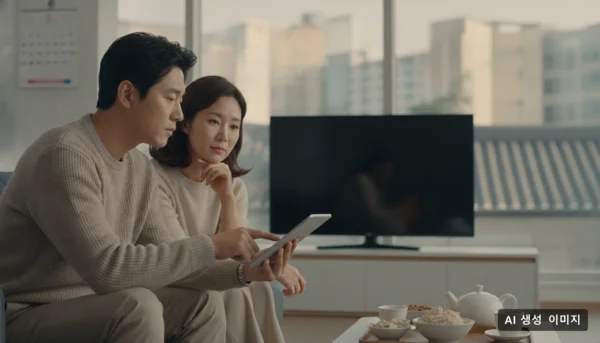
Ahead of the Chuseok holiday, terrestrial and general programming channels have simultaneously unveiled special holiday programming schedules, marking the full-scale commencement of competition in living rooms. Since advertising rates are set higher than usual during the holiday period and family-sized viewers gather all at once, broadcasters are in an atmosphere of mobilizing all their flagship variety shows. This year, as usual, expanded versions of existing popular programs, trot and pop music specials, and star-driven game competition content have been placed at the forefront of the schedules. Industry insiders commonly explain that because the holiday period is considered a test to gauge the success or failure of a broadcaster's annual programming strategy, the preparation period is set longer than usual.
The three terrestrial broadcasters have put special editions that expand the scale of existing variety programs at the forefront, similar to previous years. One broadcaster placed a special version with twice the cast of a popular variety show in the time slot on the first night of the holiday, while another broadcaster prepared a special in the form of a concert gathering singers from trot auditions in one place. Unlike the past, when drama reruns were scheduled in blocks, there is a clear recent trend of increasing the proportion of new content production. Some analyses suggest that as viewers who consume content mainly through short clips increase, broadcasters are shifting their strategies toward targeting reruns or Over-the-Top (OTT) catch-up services rather than defending live broadcasts. Some broadcasters are also paying attention to securing topicality by simultaneously releasing separately edited highlight videos on social media immediately after the broadcast of special programs.
Instead of engaging in a head-on battle with terrestrial broadcasters, general programming channels have chosen a segmentation strategy targeting specific age groups. One general programming channel placed a trot special targeting middle-aged and older generations in the holiday evening golden time, while another channel prepared a special edition of a counseling-type variety show dealing with marital and family conflicts. Even channels classified as current affairs and educational channels showed an increase in variety programming during the holiday period. A broadcasting industry official said, "The holiday period is regarded as an opportunity to increase channel loyalty, so each company tends to invest more production costs than usual." He added, "The success or failure of a single holiday special often affects subsequent regular programming reorganizations, making it a period that the industry reacts sensitively to internally."
Behind the competition for viewership ratings lies the desperation to secure advertising revenue. Looking at the broadcasting advertising revenue statistics announced annually by the Korea Communications Commission, advertising rates around the holiday period have tended to be higher than usual. From the perspective of broadcasters, they have no choice but to put effort into programming strategies since viewership ratings during the holiday period affect the attraction of advertising for the entire second half of the year. One broadcasting programming manager stated, "The evening time slots on the first and last days of the holiday are considered the decisive battlegrounds," adding, "We avoid times overlapping with traveling to or from hometowns and aim to place major programs at times when the whole family is gathered." In fact, it is known that within broadcasting companies, they undergo a process of adjusting program sequences by analyzing the expected viewing population by time slot several months before finalizing the holiday programming schedule.
Viewer reactions are mixed. While some voices express fatigue that similar formats of special variety shows are repeated every year, there are still many viewers waiting for special combinations of cast members that can only be seen during the holidays. Kim (41), an office worker, said, "Looking for programs to watch with family before heading out to my hometown has become part of the holiday preparation." On the other hand, Lee (23), a university student, said, "I often look for only the necessary parts through Over-the-Top services rather than the live broadcast, so I do not pay much attention to the programming schedule itself." Park (52), a housewife, said, "Since the time when the whole family gathers in the living room to watch television is the only time during the holidays, I choose programs that everyone can watch together on that day," showing a significant divergence in viewing habits depending on the generation.
Changes in viewing methods by generation are also being detected. According to media usage behavior data investigated by the Korea Communications Commission and the Korea Information Society Development Institute, the proportion of real-time broadcast viewing among those in their 20s and 30s is decreasing every year, while the real-time viewing ratio remains relatively high among those in their 40s and older. Because of this, broadcasters are pursuing a dual strategy: focusing on real-time programming for programs targeting the middle-aged and older generations, and focusing on short clips or online-first release methods for content targeting the younger generation. A broadcasting official explained, "Even for the same program, there are increasing cases where an edited version for real-time broadcast and an edited version for online release are prepared separately."
There are also views pointing out regrets in terms of content diversity. One broadcasting culture research fellow said, "Holiday specials are concentrated on similar formats of game variety shows or trot concerts every year, so there are relatively few new attempts," adding, "In line with the trend of diversifying viewer tastes, there is a need to increase the programming of documentary or educational program holiday specials." In fact, some broadcasters are attempting differentiation by placing special editions of history and humanities educational programs in morning time slots, but the proportion they occupy in the overall programming is not large. This researcher added, "Since the inertia to repeat safe formats is still strong, the situation is such that one can predict which programs will appear just by looking at the programming schedule every year."
Social changes, such as the decreasing time when families gather together, are also affecting programming strategies. As the number of single-person households increases and households that do not return to their hometowns increase, content targeting viewers who spend the holidays alone is also showing a gradual upward trend. One general programming channel prepared a special in the form of a talk show with the theme of spending the holidays alone, and programs introducing travel or hobby activities were also included in the holiday programming. In the household type statistics announced by Statistics Korea, the proportion of single-person households is showing an increasing trend every year, which is cited as the background for broadcasters placing both family-centered and individual-centered content in holiday programming. This year's Chuseok holiday programming schedules can be checked in advance through each broadcaster's website and Over-the-Top applications.




Comments 0
Comments are currently disabled.