
Protests in France cause 1.2 billion euro damage as unrest spreads
The KBS 1TV program "In-Depth 60 Minutes" investigates the widespread unrest in France, where protests sparked by high school students have escalated into arson, looting, and violent clashes with police.
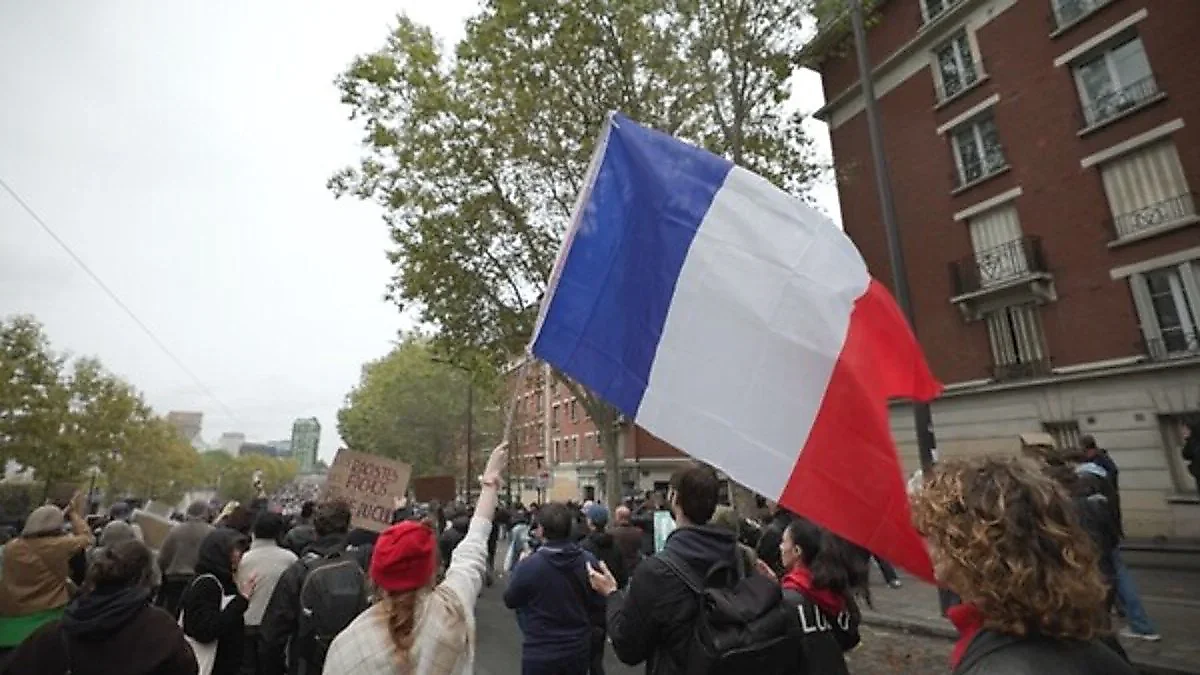
Massive protests triggered by teacher shortages at Lycée Saint-Exupéry have escalated into nationwide unrest, resulting in at least 410,000 protesters and an estimated 1.2 billion euros in damage. The violence, which includes arson and looting, has spread from France to countries including Italy, Belgium, and Spain.
The crew of "In-Depth 60 Minutes" has been dispatched to the chaos in France. What began as protests by students has escalated into arson, looting, and heavy-handed crackdowns, with the flames of anger spreading across Europe to Italy, Belgium, and Spain. On the evening of the 24th, the crew witnessed clashes in Paris amidst clouds of tear gas, meeting protesters dressed in black, the police, and the high school students who triggered the unrest. The program explores why the streets are filled with such intense fury.
Into the Tear Gas: A Night in Paris
On the 24th, the French government banned marches toward Place de la Bastille in the heart of Paris. The marches, which began on the outskirts of the city, turned into a scene of chaos by the afternoon as they clashed with police using tear gas and water cannons. The scene was so intense that the crew found it difficult to keep their eyes open amidst the pungent tear gas. On that day, the government estimated that at least 410,000 people took to the streets, resulting in approximately 1,000 arrests.
“High school students are taking to the streets to protect their rights, and even though it is scary, we have no choice,” one participant said.
Meeting the Black Bloc
The protests on the 17th threw all of France into turmoil. In Limoges, a 140-year-old city hall was engulfed in flames, and in Lyon, approximately 1,400 shops suffered damage. The protests were so record-breaking that the insurance industry estimated the damage over two days at at most 1.2 billion euros. The crew held an exclusive meeting with a participant of the "Black Bloc" who was in the midst of the urban destruction. He stated, “Because we cannot convey our message through peaceful means, we have no choice but to use violence.” The "In-Depth 60 Minutes" crew directly questioned them on why they smash the windows of luxury stores and vandalize statues in public squares.
The Origin: Meeting Students from Lycée Saint-Exupéry
These protests originated at a high school. On September 17, students at Lycée Saint-Exupéry in Créteil, southeast of Paris, built barricades due to a shortage of teachers. Public schools in France are crumbling, with ceiling-less bathrooms and classrooms lacking heating. The blockades spread to hundreds of schools nationwide, and grievances surfaced regarding the "Parcoursup" university admission system increasing inequality. Teachers and parents joined students to form human chains. This anxiety and despair are spreading to Belgium, Italy, Spain, and Greece, growing into a voice for the entire youth generation of Europe.
“We shouldn't have to study in this environment. The country has money, but they don't spend that money on high school students,” said Manel (17), a student at Lycée Jacques Brel.
Divided Squares: Youth at Extremes
Behind the global attention on the looting and violence of the French protests lies a reality crushed by soaring inflation and housing costs. There are youths who must reduce their monthly food budget to 70 euros (approximately 100,000 won) after paying rent, and citizens buying spoiled mangoes for 50 cents (approximately 800 won) at markets—a price for croissants that has doubled compared to before the pandemic.
While France is a welfare state that claims to take responsibility for citizens' lives "from the cradle to the grave," the program looks behind the curtain at the reality of ordinary people. In the face of difficult economic conditions, politics has disappeared. The "In-Depth 60 Minutes" crew met youth divided between the left and right: the RN, which seeks to hold citizens accountable for the protests by claiming they will "re-establish the rule of law," and "La France Insoumise" (LFI), which is heated in its criticism of the administration, calling to "burn the debts of the ECB."
“If I earn 2,000 euros, 1,000 euros goes out. After paying for gas and food, there is nothing left at the end of the month.”
France's current situation, facing the difficult dilemma of low growth and high inflation, is not an unfamiliar scene. Rising prices, unstable jobs, and the fear of living worse than their parents are familiar concerns for today's youth. Through France's present, the program asks about the state of the Republic of Korea. The 1478th episode of KBS 1TV's "In-Depth 60 Minutes," titled "Emergency Report - Going to a Burning Paris," airs on Friday, October 30 at 10 PM.

Covers K-pop for SPECIALTIMES GLOBAL, and also writes Culture and K-Variety stories.


Comments 0
Comments are currently disabled.