
Seoul National University Professor Lee Hyun-sook explores the potential of personalized mRNA cancer vaccines
Professor Lee Hyun-sook of Seoul National University discusses the principles and future of personalized mRNA cancer vaccines, highlighting recent clinical successes and the role of AI in identifying cancer cell weaknesses.
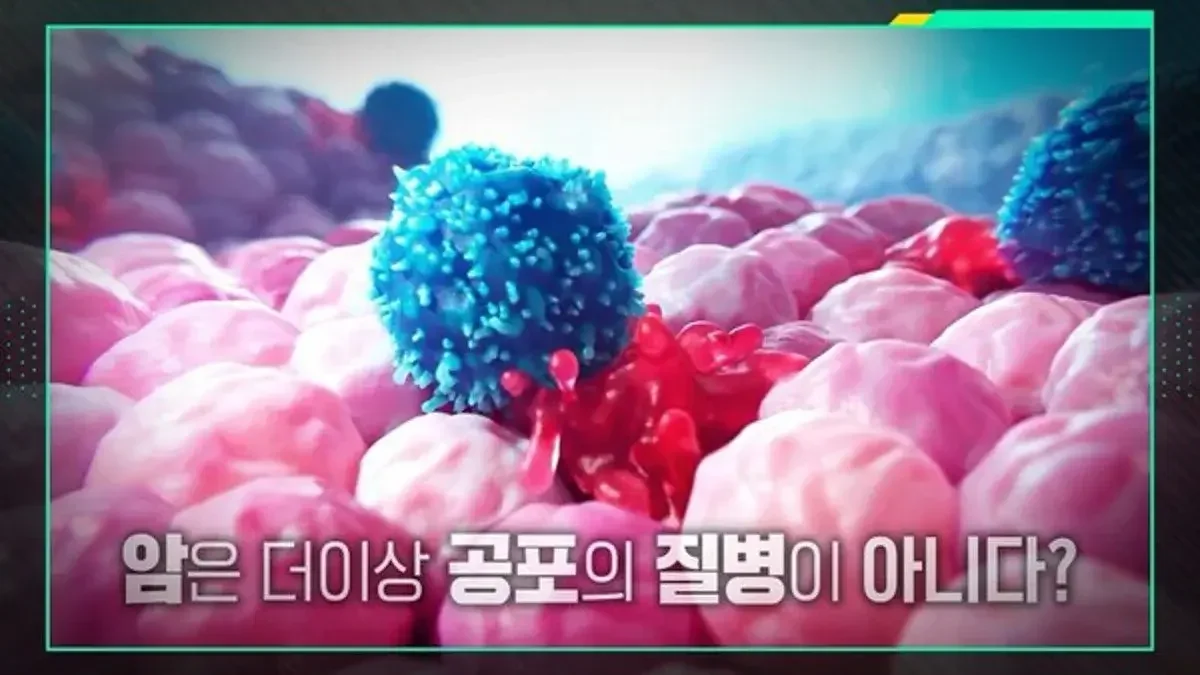
In the 302nd episode of Issues with the Teacher, the program asks: "Can cancer vaccines conquer cancer?" and explores the truth behind personalized mRNA cancer vaccines, noting that the timing of treatment remains unknown.
On August 19, 2026, a personalized mRNA cancer vaccine jointly developed by the American biotech company Moderna and the global pharmaceutical company MSD showed positive results in a Phase 3 clinical trial for melanoma. However, just nine days later, a Phase 2 clinical trial for another personalized mRNA cancer vaccine targeting colorectal cancer was halted.
Even when suffering from the same type of cancer, the characteristics of cancer cells differ from person to person, and within a single individual, cancer cells constantly change and evolve. The core of personalized cancer vaccines is to analyze these characteristics to create a vaccine suitable for each patient.
On November 1, Issues with the Teacher on KBS 1TV will feature Lee Hyun-sook, a professor in the Department of Biological Sciences at Seoul National University. As the leader of a bio-artificial intelligence research group, she works on the convergent research of the co-evolution of bio and AI and has identified the molecular biological principles of cell aging and the process of normal cells transforming into cancer cells. Together, they will examine the principles and potential of personalized mRNA cancer vaccines and look into a new future for cancer treatment.
A new challenge in cancer treatment: Vaccines for cancer patients?
Professor Lee will introduce the clinical trial results of the personalized mRNA cancer vaccine jointly developed by Moderna and MSD. The two companies conducted a Phase 3 trial involving 1,137 melanoma patients worldwide. For patients who had cancer removed through surgery, the administration of the cancer vaccine alongside the existing immunotherapy drug KEYTRUDA resulted in a reduced risk of cancer recurrence and metastasis compared to using KEYTRUDA alone. Professor Lee noted that this achievement is significant as it demonstrates new possibilities for cancer treatment alongside advancements in mRNA technology, and she will explain the cooperation process between the two companies and the principles of how cancer vaccines help immune cells attack cancer.
Different vaccines for different patients? AI finds the weaknesses of cancer cells
Professor Lee will explain the development process of personalized mRNA cancer vaccines and the role of artificial intelligence (AI). The process involves analyzing a patient's cancer cells to find characteristics that immune cells can recognize, and then designing a vaccine based on those findings. AI plays a crucial role in selecting targets for immune cells to attack from vast amounts of genetic information. "These achievements have become possible through the combination of long-term cancer research, the development of mRNA technology, and artificial intelligence," Lee stated, emphasizing the "co-evolution of AI and bio" where AI and life sciences advance together based on the knowledge and data accumulated by scientists.
From melanoma to pancreatic cancer? The challenge of cancer vaccines continues
Professor Lee will explain the possibility that the personalized mRNA cancer vaccine, which achieved positive results in the melanoma Phase 3 trial, could be used to treat other cancers such as lung, bladder, and kidney cancer. However, citing the case where a Phase 2 clinical trial for another cancer vaccine targeting colorectal cancer was halted this past August, she emphasized that "it is difficult to expect the same effect in all types of cancer."
Meanwhile, in an early clinical trial conducted by American researchers on 16 patients with difficult-to-treat pancreatic cancer, half of them (8 patients) showed an immune response that recognized the cancer cells. While she noted it is too early to declare success, Professor Lee explained that personalized cancer vaccines are opening up possibilities for treating various types of cancer.
Can personalized cancer vaccines be administered in Korea?
Professor Lee explained, "Even if personalized mRNA cancer vaccines are commercialized, it is unknown when patients in Korea will be able to receive treatment." Since a separate vaccine must be manufactured for each patient, there are many challenges to solve, such as high treatment costs and the need for a cooperative system between hospitals, research institutions, and pharmaceutical companies. She then cited the Novo Nordisk Foundation in Denmark as an example, emphasizing the importance of a virtuous cycle where scientific discoveries lead to corporate profits, which are then reinvested into scientific research.
Furthermore, she introduced cases of cooperation between American Big Tech companies and biotech firms, arguing that Korea must also establish long-term investment and cooperation systems. "We must reorganize and prepare our social systems so that innovative cancer treatment technologies do not remain a benefit for only some patients, but are delivered to all patients in need," Lee emphasized.
The 302nd episode of Issues with the Teacher on KBS 1TV, titled "Can cancer vaccines conquer cancer?", will air on Sunday, November 1, 2026, at 7:10 PM. After the broadcast, it can be rewatched on the KBS website (www.kbs.co.kr), Wavve, and the 'KBS Culture' and 'KBS Documentary' YouTube channels.
(Photo provided = KBS 1TV 'Issues with the Teacher')

Covers K-pop for SPECIALTIMES GLOBAL, and also writes Culture and K-Variety stories.



Comments 0
Comments are currently disabled.