
KBS History Special: Time Traveler Episode 39, October 4 at 9:30 PM, the 14-Year Compilation Process of Dongui Bogam
KBS 1TV's "History Special: Time Traveler" explores the secret history of Heo Jun and the Dongui Bogam, a medical text that revolutionized East Asian medicine. The program traces the 14-year journey of compiling this masterpiece through the reigns of Seonjo and Gwanghaegun.
Episode 39 History Special: Time Traveler>
East Asia's Bestseller, Dongui Bogam
The master physician who changed Joseon medicine, shaking East Asia with a single book! The secrets of Heo Jun and Dongui Bogam
Broadcast: October 4, 2026 (Sun) 9:30 PM KBS 1TV
In an era when people performed shamanistic rituals at the onset of epidemics, there was a king who commanded, "Stop the rituals and use medicine." That king was Seonjo, the 14th monarch of Joseon, who endured the Imjin War. The one who received that command was the royal physician Heo Jun. The king ordered him to create a medical book to save the people. However, it took a full 14 years for the book to be completed, and in the meantime, Seonjo, who issued the command, passed away. The task was completed by his son, Gwanghaegun. The ‘Dongui Bogam’, completed by two kings and one physician, was published over 30 times in China and repeatedly in Japan, becoming a medical text read together by all of East Asia. In Episode 39 of KBS 1TV History Special: Time Traveler, we look back at the records of that intense era until ‘Dongui Bogam’ became an East Asian bestseller.
Heo Jun, who saved Gwanghaegun, becomes a man of Seonjo
In 1590, a royal illness struck the palace. Although two princes and princesses had already been lost, the royal family was bound by the taboos of epidemics and could not even use medicine. At that time, the physician who set aside the rituals and saved the prince with medicine was Heo Jun, and that prince was the future Gwanghaegun. Amidst the ruins of the Imjin War, Seonjo entrusted the compilation of the new medical book ‘Dongui Bogam’ to Heo Jun, the physician he trusted specially. However, the life of this master physician, who changed the paradigm of Joseon medicine, before he entered the palace is not recorded in official records. What kind of person was he?
Was Heo Jun a victim of political strife?
In 1606, Seonjo intended to grant Heo Jun the rank of Jeong 1-pum Boguk Sungrok Daebu. Jeong 1-pum Boguk Sungrok Daebu is on the same level as a state minister, the highest peak of the rank system. It was a position only those who passed the civil service examination could reach. The court was turned upside down. Impeachment petitions from the Saganwon and Saheonbu poured in, and the impeachment targeting Heo Jun continued incessantly until he eventually left the palace. Why did Seonjo protect Heo Jun so much? We examine the political context behind this unconventional trust.
The Seonjo-Gwanghaegun medical book compilation project ‘Dongui Bogam’ completed in exile
When Seonjo passed away, Heo Jun took responsibility as the royal physician and was exiled to Uiju. However, in exile, he picked up his brush again for the compilation of ‘Dongui Bogam’. And in August 1610, 14 years after receiving the royal command, he presented the completed book to the next king, Gwanghaegun. The prince who suffered from the royal illness became king and completed the task his father had started. In 1613, when the bloody winds of the Gyechuk Purge were blowing, Gwanghaegun ordered that this book be printed and sent down to the provinces. The medical book to save the people was also another political message to him.
Before being a master physician, he was a 'Yu-ui (儒醫)'
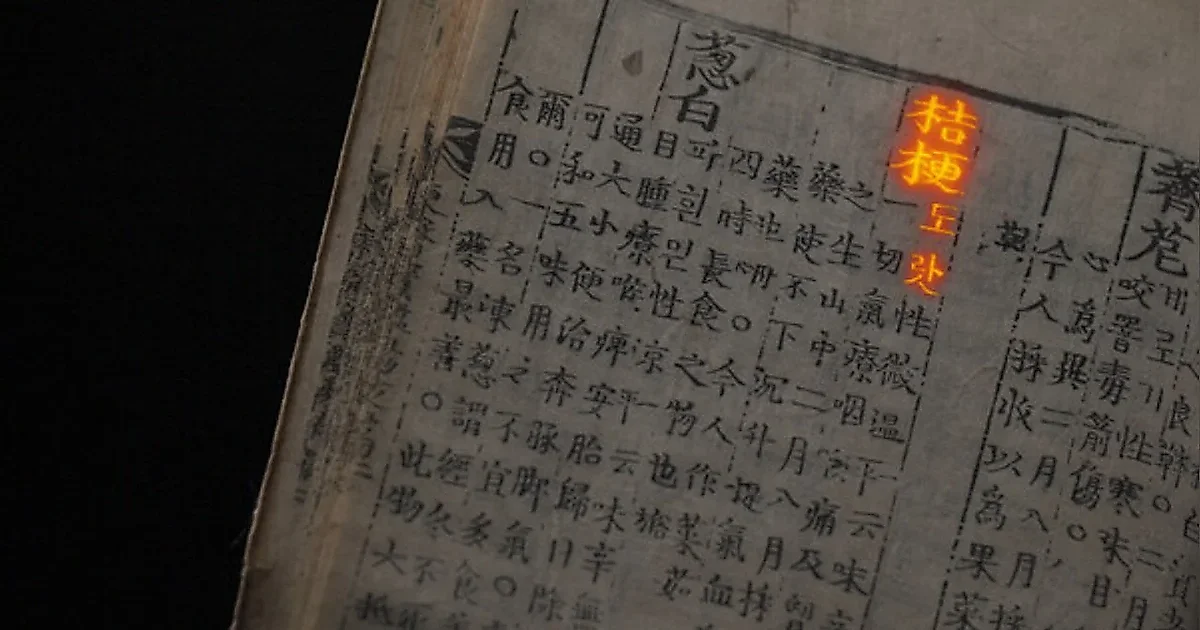
A name more suitable for Heo Jun than a master physician is Yu-ui (儒醫). ‘Dongui Bogam’ stands upon the lineage of those who were Confucian scholars yet practiced medicine, those who looked after the people with a will toward the public. That spirit is revealed from the very beginning of the book. Unlike existing medical books that prioritized symptoms and prescriptions, ‘Dongui Bogam’ placed the human body at the very front and contained the philosophy of Yangsaeng (nourishing life), which prioritizes management before getting sick rather than treatment after falling ill. The names of medicinal ingredients were also adjusted to the level of the common people. By writing Hangul alongside the medicinal names written in Hanja, those who knew even a little bit of writing could use the appropriate medicine. In the provinces where it was difficult to meet a physician, scholars learned medicine themselves. Jeminru in Yeongju, a representative regional medical institution, became a hub for local medical care through their hands.
Joseon's book captivates East Asia
Joseon envoys who went to Beijing discovered a familiar book in the bookstore district. It was ‘Dongui Bogam’, which had crossed over from Joseon. The high evaluation in China conversely raised its status in Joseon. In Japan, Shogun Tokugawa Yoshimune paid attention to this book and expanded his medicinal herb gardens, and even now, medicinal ingredients listed in ‘Dongui Bogam’ grow in the Koishikawa Medicinal Herb Garden and the Tamura Medicinal Herb Garden in Nara Prefecture. In an era that considered Chinese medicine to be the best, ‘Dongui Bogam’ did not simply transfer that knowledge; it classified medicinal ingredients that grew in its own land to suit the circumstances of Joseon, and its practicality worked all the way to Japan. We examine the virtues of ‘Dongui Bogam’ that fascinated East Asia on-site.
A book that began from a king's command and emerged through war, epidemics, factional strife, and barriers of social status. A record that is the greatest medical text of the time, synthesizing East Asian medicine, and served as the foundation for national reconstruction. All the stories of ‘Dongui Bogam’, the eternal bestseller that saved two kings and the people of Joseon, can be found on KBS 1TV History Special: Time Traveler on October 4 at 9:30 PM.
(Photo provided = KBS 1TV ‘History Special: Time Traveler’)
◆ At a Glance
· Publishing Institution : KBS
· Category : History Special: Time Traveler
· Distribution : October 1, 10:04
Source : KBS Press Release
Special Times is striving to deliver faster and more diverse news to readers with the help of AI technology.

Covers K-pop for SPECIALTIMES GLOBAL, and also writes Culture and K-Variety stories.



Comments 0
Comments are currently disabled.