
Japan's Bear Casualties Reach Record 238, Emergence of "village-dependent bear"
Conflicts between bears and humans are surging in Japan, with casualties reaching a record high.
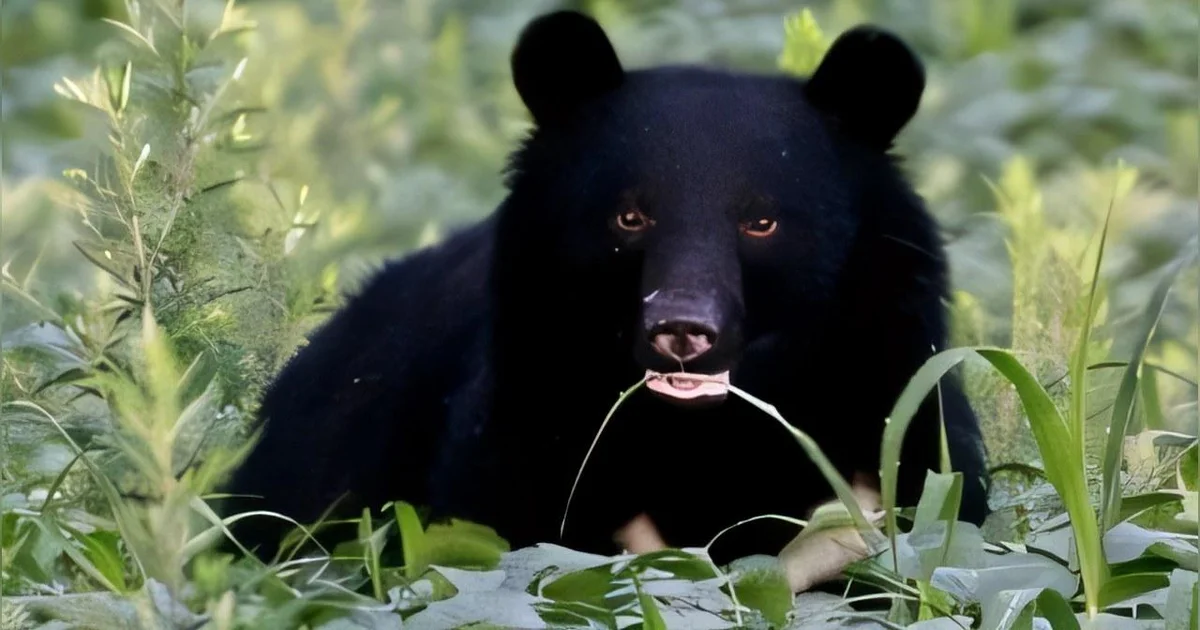
Bears strike aging Japan
Japan faces 'record-high bear damage,' while voices for coexistence emerge on the ground... Emergence of 'village-dependent bear'?
Broadcast: Thursday, September 17, 2026, 10:00 PM KBS 1TV
Conflicts between bears and humans are surging in Japan. According to the Ministry of the Environment, Japan, the number of human casualties caused by bears in the 2025 fiscal year (April 2025–March 2026) was 238, with 13 deaths, all of which were record highs. Reports of bear sightings also increased to 50,776, which is 2.5 times higher than the previous year.
Bears have descended into residential areas, schools, and farmland. However, tracing the movement paths of the bears reveals that another change is overlapping: a decrease in people and the aging of rural areas. Why are bears descending into human living zones now?
Record-high bear damage... As people leave Japan, the wilderness descends
“I heard a 'hiss' right by my ear. I thought, 'Ah, I'm going to die here.' It was a huge mistake to think I could stand against a bear. I realized that I simply cannot face them with human strength.” - Keiji Minatoya / Bear attack victim -
In a downtown area of Akita Prefecture, Mr. Keiji Minatoya was chased by a suddenly appearing Asiatic Black Bear, fell, and was concentratedly attacked on his face. He tried to defend himself with his right arm, but ultimately suffered wounds so deep that his skull was visible. The bear that attacked him attacked a total of five people, including a high school girl and an elderly woman, in succession that day.
Similar tensions are spreading into daily life across various parts of Japan. In another region, students were unable to attend school due to bear sightings and had to take online classes. The places where humans and bears encounter each other have expanded beyond the mountains and closer to living zones. Why have bears descended so close to humans? Following the background, abandoned farmland and rural areas left by people appear.
Fields left by people become feeding grounds for bears
“If a mother is caught in a trap or cage, the cub becomes an orphan and remains around the village. The most dangerous ones are the inexperienced young bears. They actually pick fights and attack multiple times without running away.” - Kazuhiko Maita / Asiatic Black Bear Research Institute -
Following the places where bears descend, traces of people leaving are visible. In rice paddies where farming has been abandoned, water plantain grows and becomes food for bears, and mulberries grow on wild mulberry trees that have not been cut down. Places that once produced rice have become feeding grounds for bears. Bears that become accustomed to the food in villages gradually become dependent on human living zones. Cubs left alone in a village after their mothers are captured grow up without properly learning how to survive in the wild or how to avoid humans. These are the so-called ‘village-dependent bear’.
Aging Japanese rural areas, the collapsing boundary between humans and the wild
“The land that used to be farmland has become overgrown with grass and has now turned into something like a forest, making it easy for wild animals, including bears, to descend into the village. I believe the low birth rate, aging population, decline of agriculture, and the intrusion of wild animals into homes are deeply related.” - Kiyoshi Yamauchi / Associate Professor, Department of Regional Environmental Science, Iwate University -
The number of people guarding the boundary between humans and the wild is also decreasing. Japan's agricultural workers decreased by about 90%, from 11.75 million in 1960 to 1.036 million in 2025. About 70% of the remaining agricultural workers are aged 65 or older. Land that is no longer farmed turns into thickets and forests, and the buffer zone between the mountains and villages is gradually disappearing.
The number of hunters who have managed bears is also decreasing. Even in the Matagi village of Akita Prefecture, which has maintained a bear hunting tradition for 400 years, the number of hunters has decreased from 200 in the past to around 30. Due to the population decline, the bear problem created by it cannot be solved because there are no people.
Finding the 'distance of coexistence' closest to bears
Is unconditional expulsion the only answer to avoid conflicts with bears? In various parts of Japan, while capturing bears to protect human living zones, methods are also being sought to acknowledge the existence of the wild and maintain an appropriate distance. People who have lived closest to bears are also creating their own distances through capture and mourning, observation and coexistence.
The production team personally visited incident sites, such as Mount Towari (4 deaths), where a tragedy occurred 10 years ago, to film bears at close range and focused on investigating the background of why the wilderness descended into cities and began harming people.
For South Korea, which is experiencing low birth rates, aging populations, and local extinction, this change is not someone else's business. In an era where the wilderness fills the space left by humans, what kind of distance should we live with the wild? It is time for a new law of coexistence between bears and humans.
Docu Insight: ‘Bears strike aging Japan’ will be broadcast on Thursday, September 17, 2026, at 10:00 PM on KBS 1TV.
(Photo provided = KBS 1TV ‘Docu Insight’)
◆ At a Glance
· Publishing Institution: KBS
· Category: Docu Insight
· Distribution: September 17, 10:45
Source: KBS Press Release
Special Times is striving to deliver faster and more diverse news to readers with the help of AI technology.



Comments 0