
SBS 'The story of the day when the tail was bitten' hits No. 1 ratings while exposing human rights abuses at Yeonghwa Home and Jaesaengwon
The SBS program 'The story of the day when the tail was bitten' achieved top ratings while detailing the horrific human rights violations at Yeonghwa Home and Jaesaengwon, facilities described as the predecessors to Brothers Home. The episode featured the confession of a life-sentence prisoner, Shin Gyeong-ho (pseudonym), who sought to return the bodies he once buried to their families.
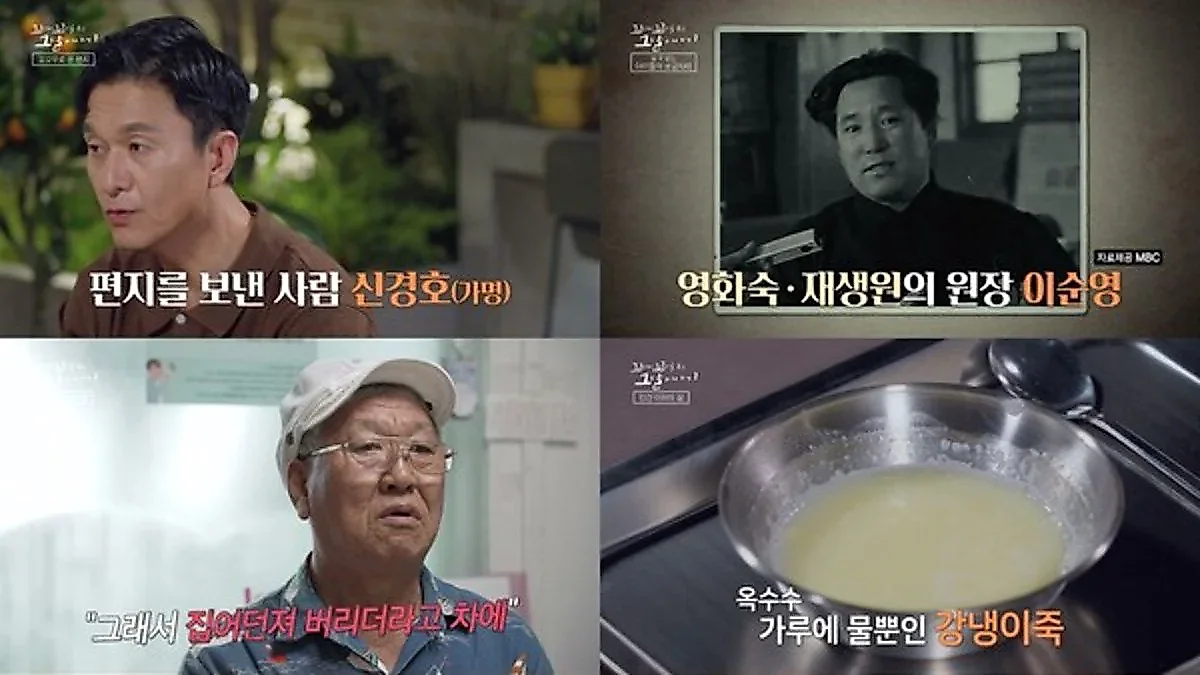
SBS 'The story of the day when the tail was bitten' (directed by Ahn Yun-tae, Lee Keun-byeol, and Moon Chi-young) aired its 245th episode on the 22nd, titled "Killer's Letter - Yeonghwa Home Jaesaengwon." Featuring listeners Joo Hyun-young, Bong Tae-gyu, and DinDin, the episode revealed the confession of a life-sentence prisoner serving his 36th year in prison. The program proved its significant influence by ranking first in both nationwide and 2049 viewership ratings among all informative and entertainment programs in its time slot (based on Nielsen Korea terrestrial standards).
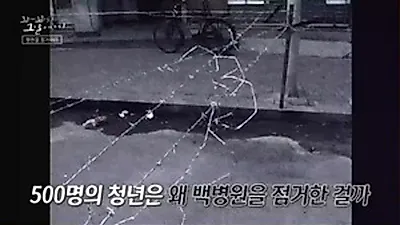
In March 2025, the production team received a letter from a life-sentence prisoner, Shin Gyeong-ho (pseudonym). He confessed that while staying at Yeonghwa Home and Jaesaengwon—facilities for vagrants in Busan—he was trained in criminal methods and mobilized for robberies and drug deliveries. Through further investigation into the facilities, the production team uncovered shocking truths regarding the victimization at Yeonghwa Home and Jaesaengwon.
Under past government "social purification" policies, Busan Metropolitan City entrusted vagrants under the age of 18 to Yeonghwa Home and those 18 or older to Jaesaengwon. However, director Lee Sun-young carried out indiscriminate kidnappings to secure the state subsidies provided based on the number of inmates. Once brought to the facilities, children's names were falsified in the ledgers, making it difficult for parents to identify them even if they came searching. Inmates slept on floors in cramped rooms without being able to lie flat, and nighttime use of the restroom was prohibited, causing the stench of waste to permeate the air. Military-style roll calls were held every dawn, and violence was used to prevent the inmate count from dropping, which would decrease subsidies. Meals consisted only of thin corn porridge, and children suffered extreme hunger, to the point of eating maggots. Those who attempted to escape were ruthlessly beaten with hoe handles. Listener Joo Hyun-young expressed indignation, stating, "It is an environment where humans cannot live."
To reduce labor costs, inmates were given armbands to monitor one another, leading to a cycle of violence. Assaults and sexual violence occurred among the inmates, and the bodies of those who died from malnutrition and beatings were secretly buried in nearby reed fields and mountains by the inmates. Bong Tae-gyu reacted with shock, calling it "hell."
In 1969, Father Aloysius Schwartz, who operated a relief hospital near Yeonghwa Home and Jaesaengwon, discovered the horrific conditions and reported them. Although director Lee Sun-young was arrested, he was released after only six days. Following a petition movement for 100,000 citizens led by Father Schwartz, the entrustment contract with Busan Metropolitan City was canceled in 1971, cutting off state subsidies. However, Lee Sun-young's misconduct did not stop. He transformed the facilities into a "crime academy" by teaching children pickpocketing, housebreaking, and drug delivery. While the corporate permit for Yeonghwa Home and Jaesaengwon was revoked in 1976, Lee Sun-young was only punished with a fine of 300,000 won. He later died of a disease, and the wealth he accumulated through illegal activities passed to his family.
Victims released from the facilities were branded as persons of unknown identity, leading to torture or being dragged to Brothers Home and the Samcheong Re-education Camp. It is reported that Brothers Home, considered one of the worst human rights violation facilities, modeled its operations directly after Yeonghwa Home and Jaesaengwon. DinDin remarked, "If it were me, I feel there would have been no hope," adding, "It is so pitiful and heartbreaking."
The prisoner, Shin, who sent the letter to the production team, was currently serving time after committing murder following a dispute with a neighboring shop after several previous incarcerations. While he does not seek any forgiveness from the production team, he expressed his desire to excavate the bodies he buried at Yeonghwa Home and Jaesaengwon in the past and return them to the bereaved families.
Finally, Bong Tae-gyu emphasized the importance of remembering this tragic history, stating, "We must not forget such incidents." DinDin also expressed deep bitterness and regret over the catastrophe caused by the authorities' neglect and the facility's atrocities, noting, "If Yeonghwa Home and Jaesaengwon had not existed in the first place, there would have been no need to tell these stories." Following the broadcast, intense reactions appeared on various social media and communities, with comments such as, "My heart breaks thinking about the victims," "I felt tears and anger rising the whole time I watched," and "It makes me angry to hear the stories of people who lived unfairly their whole lives after being dragged away like kidnappings."
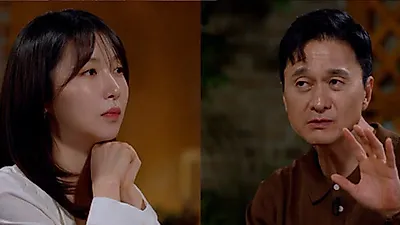
Meanwhile, 'The story of the day when the tail was bitten' is a program where three storytellers study topics themselves and deliver what they feel to their "story friends" in a 1:1 format in everyday spaces. It airs every Thursday at 10:20 PM on SBS.
Copyright © SBS & SBSi. All rights reserved. Unauthorized reproduction, redistribution, or use for AI training is prohibited.

Covers K-pop for SPECIALTIMES GLOBAL, and also writes Culture and K-Variety stories.
Comments 0
Comments are currently disabled.