
Monthly Autism Treatment Costs Reach 11 Million Won... Korea Leaves Families to Fend for Themselves, While US and Japan Take State Responsibility
The SBS 'News Story' report examines the reality of autism spectrum disorder in South Korea…

The reality of 'autism private education' in South Korea: A country where treatment has turned into private education
"11 million won per month for full-day programs"... Autism treatment transformed into a private education market
On-site reporting in the US and Japan: 'The state and community take responsibility'
SBS 'News Story' examines the domestic reality of the 'treatment war' parents face after an autism spectrum disorder diagnosis, and compares it with the advanced support systems in the US and Japan, where the state and local communities take full charge of treatment and care.
"Once you receive the diagnosis, there is no system at all"... The path of fighting alone after an autism spectrum disorder diagnosis
Autism spectrum is a neurodevelopmental disorder characterized by limited interests, repetitive behaviors, and difficulties in social interaction. In the US, it appears in about 1 out of every 31 children aged 8, and in South Korea, the registered population of autistic disabilities under the age of 19 has increased nearly threefold over the past 15 years. As the perception spreads that autism spectrum disorder can have a different growth trajectory if discovered as early as possible for early intervention, more parents are focusing on rehabilitation treatment while the child is young. The problem is that in South Korea, where national systems to assist early intervention are lacking, the individual battles of parents begin. Although regional hub hospitals for developmental disabilities have been established and behavioral development promotion centers have been created, in most cases, one must wait years to receive medical examination and treatment. Ultimately, the demand that the public system cannot handle is flocking to private education centers, and parents are being driven into a reality of 'center hopping'—moving from one private treatment room to another—much like how children are sent through a 'hagwon (academy) loop' after school.
"11 million won per month for full-day programs"... Autism treatment transformed into a private education market
Jun-seo (pseudonym), aged 7, has been diagnosed with autism spectrum disorder. The Bubu's schedule begins in earnest at 3 PM when Jun-seo finishes kindergarten. To undergo rehabilitation training, visiting two or three places a day is the standard, including Sooyoung and behavioral therapy (ABA). Because the schedule was overwhelming, the dual-income Bubu has had the father temporarily quit his job to look after the child. The problem is the treatment cost. The Bubu said they spend up to 4 million won a month on treatment costs. The monthly treatment cost for a full-day program at a center known to be the most expensive among domestic behavioral therapy facilities reached as much as 11 million won. In fact, as a result of a survey conducted by the production team targeting 517 parents raising children with developmental disabilities including autism, approximately 60% of respondents were spending more than 1 million won per month on treatment costs, and there were not a few households spending more than 3 million won. However, the amount covered by government support was only an average of 100,000 to 200,000 won per month.
"I am raising an autistic child, but there is no burden"... On-site reporting in the US and Japan: 'The state and community take responsibility'
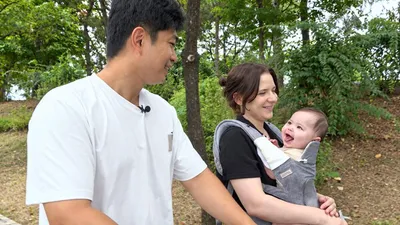
Unlike us, who wander around searching for treatment rooms, in the US and Japan, the state and the community are moving first. The production team personally visited the US and Japan to observe the daily lives of families raising autistic children.
In the US, after an autism diagnosis, support needed by the family is connected, and various rehabilitation treatments such as behavioral therapy and speech therapy can be received through insurance and public support. In Japan, too, from the infant/toddler checkup stage, various experts monitor the child's development and connect necessary families to local relevant institutions. Treatment costs are also based on public support, preventing cases where treatment cannot be received due to the family's economic situation. Unlike South Korea, where one must fend for themselves after a diagnosis, both countries have the state and local communities supporting the child's treatment and the family's daily life together.
SBS 'News Story' broadcasts on Saturday the 12th at 8 AM.
Copyright © SBS & SBSi. All rights reserved. Unauthorized reproduction, redistribution, and use for AI training is prohibited.
◆ At a Glance
· Issuing Organization: SBS
· Category: News Story
· Distribution: September 11, 13:34
Source: SBS Press Release
Special Times is striving to deliver faster and more diverse news to readers with the help of AI technology.

Comments 0