
KBS Highlights 45-Year License Fee Freeze as Global Public Broadcasters Gather in Seoul
The 2026 Public Broadcasters International (PBI) Seoul General Assembly opened on the 15th, drawing some 300 participants from about 40 countries. KBS President Park Jang-beom highlighted the broadcaster’s monthly TV license fee, frozen at 2,500 won for more than 45 years, as an example of the financial pressure facing public broadcasters.
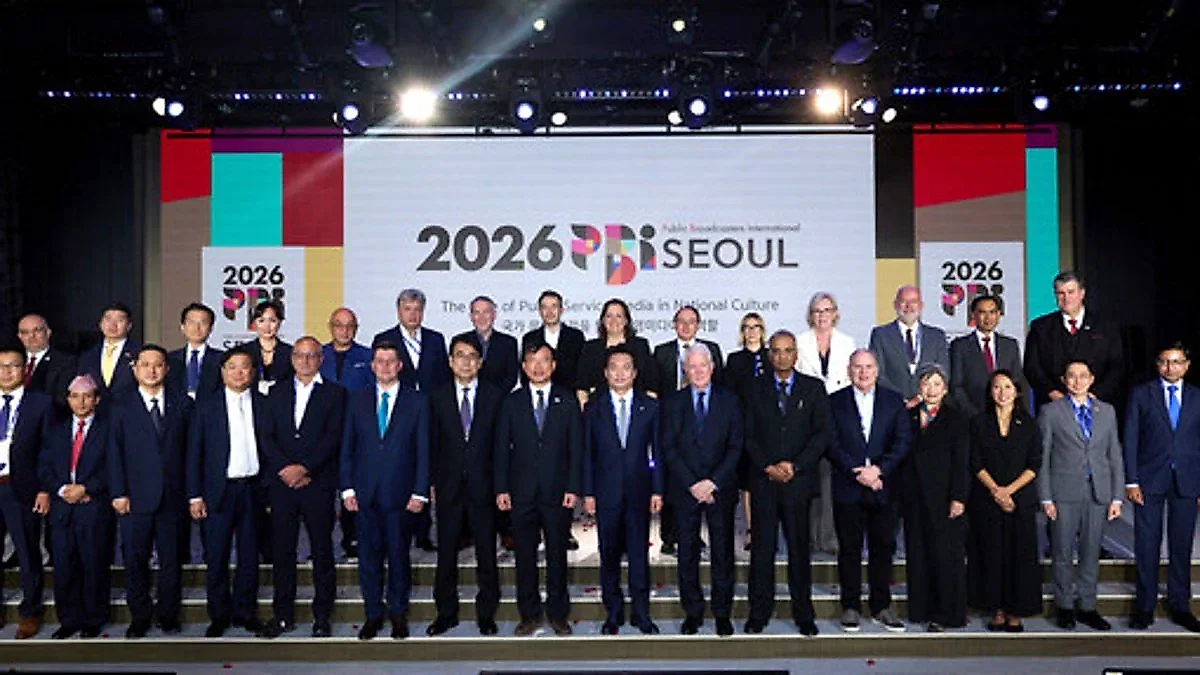
KBS President Park Jang-beom highlighted a TV license fee frozen for more than 45 years as the 2026 Public Broadcasters International (PBI) Seoul General Assembly officially opened on the 15th at Fairmont Ambassador Seoul in Yeouido, Seoul.
The gathering drew some 300 participants from about 120 organizations in roughly 40 countries, including chief executives and key officials from around 30 public broadcasters and diplomatic representatives in South Korea from 18 countries. Participating broadcasters included the United Kingdom’s BBC, Japan’s NHK, France’s Télévisions, Canada’s CBC/Radio-Canada and the United States’ NPR.
Park, who also chairs the assembly, used his opening address to call for international solidarity as public broadcasters confront financial pressure and a leadership crisis amid changes in their political and institutional environments.
“The reality facing public broadcasters around the world is very difficult,” he said, identifying budget shortages, rising production costs, external pressure and challenges from new technology as shared threats.
Park said that although South Korea had made remarkable economic and cultural progress over recent decades, KBS’s monthly TV license fee had remained frozen at 2,500 won for more than 45 years. He cited this as a representative example of the financial strain on public broadcasting. Public broadcasting executives from other countries also expressed agreement about the sector’s financial crisis.
In a congratulatory address read on his behalf, President Lee Jae Myung said public media protect and develop their countries’ cultures while serving as bridges for communication with the world. He cited KBS’s promotion of Korean culture internationally through K-POP and Korean dramas as a leading example.
Lee described the assembly’s theme, “The Role of Public Media in National Cultural Development,” as highly timely. He said he hoped the gathering would provide a forum for communication and cooperation to address the challenges facing public media worldwide.
Song Ki-hun, chair of the National Assembly’s Science, ICT, Broadcasting and Communications Committee, said governments and legislatures needed to devote greater attention and effort to helping public broadcasters uphold and expand their role amid commercial pressures.
Kim Jong-cheol, chair of the Broadcasting and Media Communications Commission, described public broadcasting as an important public asset that records a community’s history and shapes new values for society to pursue. He expressed hope that the assembly would offer a meaningful opportunity to explore new roles for public media together.
In his response, PBI Secretary-General David Jordan said KBS had played an important role in promoting Korean culture, from dramas to K-POP, making Seoul an especially suitable place to discuss this year’s theme.
“Public broadcasters may operate in different circumstances, but they share the same goals: to safeguard editorial independence and impartiality, build trust and serve the public,” Jordan said.
The opening ceremony began with the National Gugak Center’s traditional performance “Ssangchun Aengjeon,” which combined dance with the sounds of instruments including piri, haegeum, danso and janggu. The performance received an enthusiastic response from attendees.
The Mirme Taekwondo Demonstration Team brought the ceremony to a successful close with a taekwondo performance set to lively music, drawing strong applause.
Established in 1990, PBI brings together leaders of major public broadcasters to discuss the role and future of public media and strengthen international solidarity and cooperation. KBS, South Korea’s only full member and a member of PBI’s steering committee, hosted the assembly for the third time this year, following the 2007 and 2018 gatherings.

Covers K-pop for SPECIALTIMES GLOBAL, and also writes Culture and K-Variety stories.


Comments 0
Comments are currently disabled.