
Tarek Atoui's Sound Exhibition at Tate Modern's Turbine Hall until next April 11
The "Hyundai Commission: Tarek Atoui: Hold" exhibition, part of the long-term partnership between Hyundai Motor Company and Tate, will be held at the Turbine Hall from the 13th of this month until April 11 of next year.
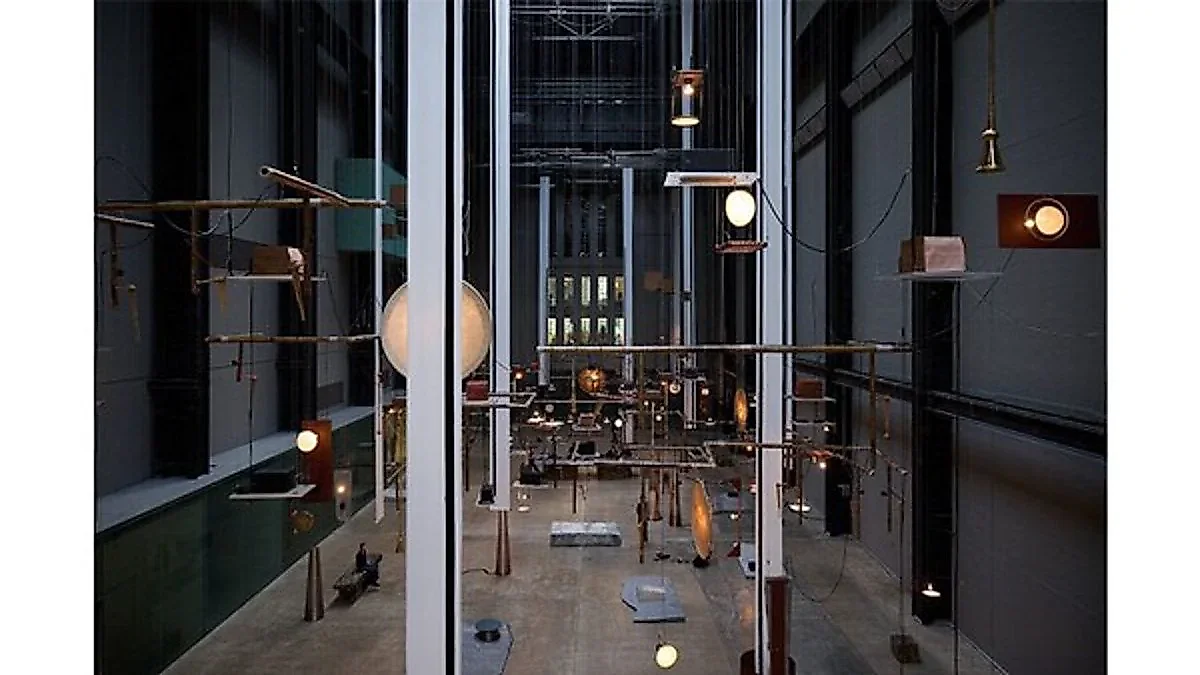
The "Hyundai Commission: Tarek Atoui: Hold" exhibition, held as part of the long-term partnership between Hyundai Motor Company and Tate in the UK, will take place from Tuesday the 13th (local time) of this month until Sunday, April 11 of next year.
'Hyundai Commission' is a curated exhibition at Tate held according to the long-term partnership that Hyundai Motor Company and Tate have maintained since 2014. It presents a new work every year in the Turbine Hall, a large-scale exhibition space at Tate Modern with high accessibility, so that many people can experience art.
Following Abraham Cruzvillegas in 2015, Philippe Parreno in 2016, SUPERFLEX in 2017, Tania Bruguera in 2018, Kara Walker in 2019, Anicka Yi in 2021, Cecilia Vicuña in 2022, El Anatsui in 2023, Mire Lee in 2024, and Máret Ánne Sara in 2025, Tarek Atoui participates this year as the eleventh artist.
Tarek Atoui is an artist and composer born in Beirut, Lebanon, and currently based in Paris, France. Based on his research into traditional instruments and music from various regions of the world, he has presented installation and performance works that create environments where sound can be experienced with the whole body, going beyond the dimension of simply listening with the ears.
In this Hyundai Commission, Tarek Atoui focused on the high ceiling, wide space, and the characteristics of sound echoing and spreading within the Tate Modern Turbine Hall.
Through wind and percussion instruments he personally manufactured or reinterpreted, as well as various sculptural works, he presented a multi-sensory experience expanded to touch and sight, such as airflow, vibration, and movement, in addition to hearing. This worked like a single orchestra to create a 'Sonic Landscape' that unfolds across the entire space.
This exhibition started from the artist's memories of places where people gather to rest, such as awnings covered in vines and cozy courtyards. By arranging stones reminiscent of stone percussion instruments, the exhibition is composed so that the audience can stay within the work, sitting or lying down to experience sound and a sense of space while observing the instruments spread above the space and the sculptures installed in various places, further expanding the Turbine Hall into a place of meeting and interaction.
The artist, who has continuously worked on integrating experimental technologies with traditional instruments, connected over 20 years of experiments and explorations conducted with various musicians, instrument makers, engineers, and researchers from Asia, Europe, and other regions through this exhibition.
Based on this, he reinterprets the 'sheng', a traditional wind instrument originating from China and Southeast Asia, the traditional Korean drum, and the 'karnai', a ritual brass instrument from Uzbekistan, and unfolds an original sonic landscape by combining them with electronic sound devices.
Upon entering the Turbine Hall, the karnai is installed on the following ramp, accompanied by two trumpets that reinterpret the long and slender form of the karnai. Inside the Turbine Hall, between the sheng and bamboo structures, drum skins, gongs, trumpets, stones, and a 20m long fabric are installed, and motors send wind between the structures to create various sounds and movements.
In particular, the fabric used in this exhibition is coated with conductive paint, so it moves according to changes in airflow and humidity in the space, transmitting minute electric currents to electronic sound devices to create changing low-pitched sounds.
Microphones embedded throughout the exhibition space collect the sounds made by the instruments and the sounds occurring inside and around the Turbine Hall, reconfiguring and replaying them as part of the work; these elements constitute a sonic landscape that changes constantly during the exhibition period.
Furthermore, reflecting the artist's working method that emphasizes improvisation, live performances utilizing the Turbine Hall as one giant acoustic system will be held regularly during the exhibition period. Various performers and electronic music artists will participate, introducing the works of musicians who have long collaborated with the artist while simultaneously creating new opportunities for collaboration and exchange.
The curation of this exhibition was handled by Tate Modern's Senior Curator of International Art Nabila Abdel Nabi and International Art Curator Dina Akhmadeeva.
A Hyundai Motor Company official stated, "《Hyundai Commission: Tarek Atoui: Hold》 connects different cultures and communities through the medium of sound," adding, "Tarek Atoui's work, based on collaboration and multi-sensory experience, opens up the possibility of meaningful exchange and new dialogues about the contemporary."
Meanwhile, Hyundai Motor Company is extending its partnership with Tate until 2036 and continues its efforts to provide a forum for dialogue required by the contemporary era by breaking down boundaries between generations, regions, and fields through the medium of art.
Additionally, along with the Hyundai Commission, they sponsor the 'Hyundai Tate Research Centre: Transnational' and have supported Tate in presenting exhibitions and programs that reflect diverse art histories from a global perspective through research and academic events encompassing wide-ranging international exchanges with various experts around the world since its establishment in 2019.

Covers K-pop for SPECIALTIMES GLOBAL, and also writes Culture and K-Variety stories.
Comments 0
Comments are currently disabled.