
Traditional flavors follow the historic Auraji raft route
The KBS 1TV program "Korean Cuisine and Dining" explores the historical raft routes from Auraji to Mokgye Ferry Landing, tracing the traditional foods of raft drivers and river villagers.
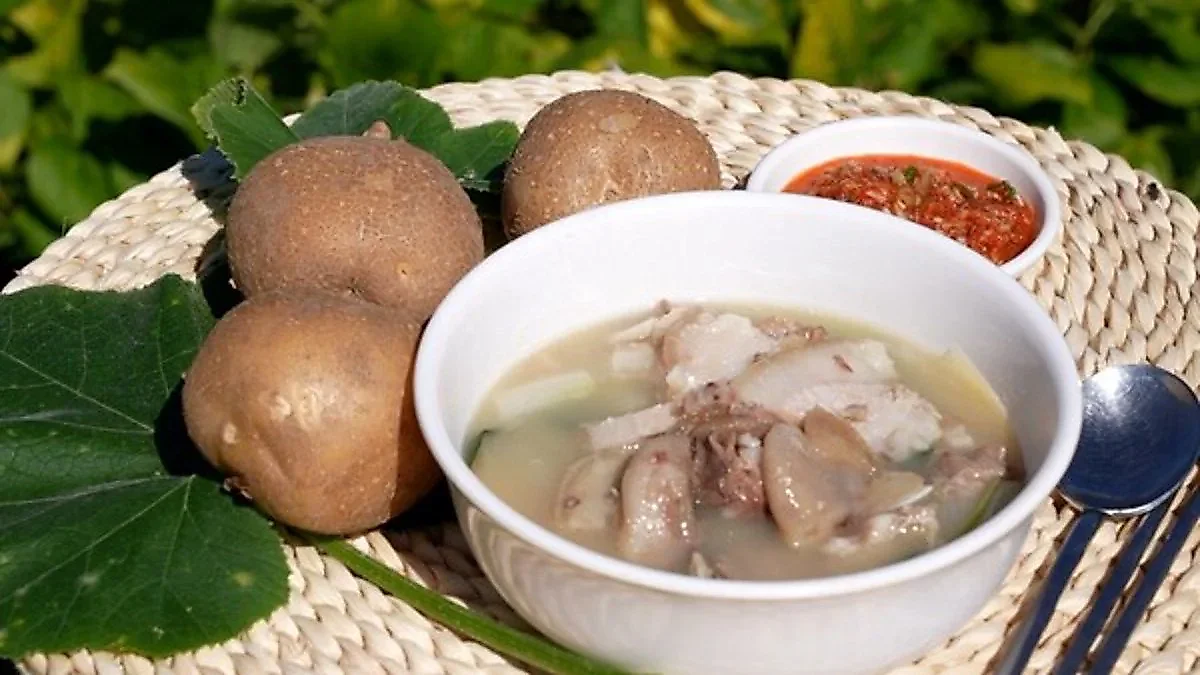
KBS 1TV will broadcast a journey through the Auraji raft route on October 22, 2026, exploring regional dishes like Jeongseon potato gamjabungsaengi and Yeongwol buckwheat noodles used by historical timber transporters.
Episode 775 of Korean Cuisine and Dining: "Life flows through every winding rapid" – The Auraji raft route dining table. Following the river and the flavors, this local food journey travels through Jeongseon's potatoes, Yeongwol's buckwheat, and Chungju's gatmu along the "Auraji raft route." Broadcast on Thursday, October 22, 2026, at 7:40 PM on KBS 1TV.
In eras when mountains were deep and paths were rugged, rivers served as the gateway to the world. The "Auraji raft route" was a waterway used to transport timber from the mountain villages of Gangwon Province to Seoul. This journey tells stories and memories of old flavors flowing along the winding river.
From Auraji in Jeongseon, Gangwon Province, through the Donggang River in Yeongwol, to Mokgye Ferry Landing in Chungju, the stories of raft drivers who braved rough rapids and the river villagers who lived by the water are being passed down alongside the region's ancient flavors. The program meets the lives of river villagers and the meals that remain—from the food of the raft drivers to the river village tables prepared with fish caught in the river, and the food at ferry landings where sailors and merchants once gathered. It explores the lives and dining tables of the people who followed the raft route during the time when the river was the road.
The raft route starting from Auraji, a dining table imbued with the sorrows and joys of raft drivers – Yeoryang-myeon and Jeongseon-eup, Jeongseon-gun, Gangwon Special Self-Governing Province
Auraji in Yeoryang-myeon, Jeongseon-gun, Gangwon Special Self-Governing Province, is where the Songcheon River, which starts in Pyeongchang, meets the Goljicheon stream from Samcheok. This is where the long journey of raft drivers began, as they bundled high-quality timber harvested from deep mountains into rafts to transport to Seoul. Lee Gyun-sik (86), the last raft driver of Jeongseon, who navigated rough currents and rapids to support his family's livelihood during difficult times, shares stories of his first raft ride at age 22 accompanied by the melodies of Arirang.
Yongtan-ri in Jeongseon-eup is a village where many raft drivers lived, situated along the Joyang River, which is known for its strong rapids. When a father working as a raft driver returned safely from a journey to Seoul, villagers would gather to hold a feast to celebrate his safe return. Despite the hardships of those times, it was a special occasion because the drivers would bring home significant earnings; villagers would slaughter a pig to make and share pork head soup. The feast in the raft driver village includes dishes such as gamjabungsaengi—made by mixing potato flour into a dough, cooking it like rice cake, and then mashing it with boiled potatoes—along with fragrant grilled shiitake mushrooms.
Along the winding Donggang River, an old meal from Meokgol Village – Yeongwol-eup, Yeongwol-gun, Gangwon Special Self-Governing Province
Meokgol Village in Yeongwol-eup, Yeongwol-gun, Gangwon Special Self-Governing Province, is located along the path where rafts traveling from Jeongseon descended along the Donggang River. Living facing the Donggang River, which winds between steep cliffs and mountain foothills, the villagers grew up watching the raft drivers cutting through the currents.
Although the rafts have disappeared, the lives of the people remain tied to the Donggang River. Smoked freshwater fish stew, which utilizes a village secret of smoking and drying freshwater fish caught in strong rapids to preserve them for long-term consumption, offers a unique flavor that is hard to find. Buckwheat noodles, made from buckwheat which grew well even in barren soil and was considered a "filial son" crop in Gangwon Province, provide a simple yet deeply flavorful taste of the region.
Hong Won-do (93), the last raft driver of Yeongwol met at the Donggang River, says he spent his youth on the river after starting his first raft ride at age 19. Raft drivers used to eat their meals at riverside taverns, and even after 70 years, the "raft driver's meal" is not forgotten. The program recreates and tastes the tavern's raft driver meal with villagers—a meal that consisted only of corn rice, seasoned vegetables, and green chili peppers, yet was described as tasting like honey. It is a dining table that contains the lives and years of those rooted in the Donggang River.
Even though the spring days of Mokgye Ferry Landing have passed, the longed-for dining table remains – Eomjeong-myeon, Chungju-si, Chungcheongbuk-do
When the Seogang and Donggang Rivers of Yeongwol merge to become the Namhan River and flow toward Seoul, they reach the Mokgye-ri ferry landing in Eomjeong-myeon, Chungju-si, Chungcheongbuk-do. Mokgye Ferry Landing, where people and goods gathered along the Namhan River, was a major inland port where raft drivers and boats heavily laden with goods from various regions moved incessantly. Although the scenery has changed over time, there are still those who guard the Namhan River while polishing stones shaped by the river over many years.
Shin Gwan-yong (73), who has lived in Mokgye-ri for nine generations, introduces old foods that can only be tasted in this village. Saengtteokguk, which was made for raft drivers or sailors who slept at the ferry landing and had to depart early in the morning, was a hearty meal that comforted those on their journey.
The old dining table of Mokgye, which is difficult to encounter easily, is completed with dishes such as braised chammajaro, which was commonly eaten in river villages that had never seen the sea, Dongbujeon, which was fried during ancestral rites or holidays as a substitute for expensive mung beans, and Gatchae, a specialty kimchi made from gatmu, which is said to be grown only in Mokgye-ri.

Covers K-pop for SPECIALTIMES GLOBAL, and also writes Culture and K-Variety stories.


Comments 0
Comments are currently disabled.