
KBS Mysteries of the Human Body: Ignoring Knee Pain While Running Can Worsen Iliotibial Band Syndrome
The KBS 1TV program "Mysteries of the Human Body" explores knee health…
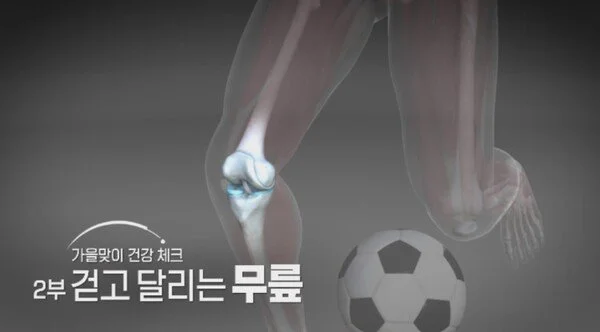
Episode 1008 of Mysteries of the Human Body>
Autumn Health Check: Walking and Running Knees
Which pain should you stop for, and which can you continue through? Knee health methods for athletes
Broadcast: Wednesday, September 16, 2026, at 10 PM on KBS 1TV
In the September 16, 2026, broadcast of Mysteries of the Human Body on KBS 1TV, we will examine the warning signs of pain and ways to use joints for a long time, ranging from knee pain occurring during sports activities such as running and hiking to joint damage caused by degenerative changes.
Pain you can continue exercising through, and pain you must stop for
Walking, running, and hiking are representative exercises for health. However, knee pain occurring during exercise should not all be accepted as the same signal. Some pain requires rest and treatment, while for other pain, continuing exercise while managing it may be helpful.
Orthopedic surgeon So Sang-yeon (40 years old) has completed a full marathon course. Due to confidence in his exercise abilities, he continued running while enduring pain, but eventually, Iliotibial Band Syndrome became chronic. We will highlight important principles of knee health that even doctors can easily miss.
Find the cause of knee pain
As the number of people starting running increases recently, interest in knee pain occurring during exercise is also growing. Three members of a running club who usually complained of knee pain. Although all three complained of pain in the knee area, the results of their examinations showed that the locations and causes of the pain, such as degenerative arthritis and patellofemoral arthritis, were different. We look into the various symptoms, causes, and treatments of knee pain.
A single injury determines joint health for a lifetime
Shin Ji-woo (39 years old), who enjoyed amateur baseball, suffered damage to the anterior cruciate ligament (ACL) and meniscus when his knee twisted significantly during a landing in a game. The cruciate ligament, which maintains knee stability, and the meniscus, which absorbs impact, are difficult to recover naturally once damaged. In particular, since the meniscus can lose its joint protection function once damaged, it is important to use treatments that preserve it as much as possible. We look at the treatment process of protecting damaged knees through ACL reconstruction and meniscus repair.
Bow-leggedness and degenerative arthritis: Breaking the vicious cycle
Oh Ji-eun (57 years old) suffered from knee pain for nearly a year following a fall. As a result of the examination, damage to the inner knee cartilage and meniscus, as well as bow-legged deformation, were confirmed. Bow-leggedness is not just a matter of leg shape. As weight concentrates on the inner knee, it exacerbates cartilage damage, which can lead to a vicious cycle where the damaged joint further intensifies leg deformation. We look into the relationship between knee alignment and joint cartilage damage, and the treatments to correct it.
Before artificial joints, the golden time for treating and protecting my own joints
Yoon Chang-geun (60 years old), who has enjoyed tennis for over 30 years, was advised to undergo artificial joint surgery due to severe cartilage damage. However, after receiving osteotomy and umbilical cord blood stem cell cartilage regeneration therapy, he was able to stand on the tennis court again. Recently, various treatments are being attempted to preserve and help recover damaged cartilage. We look at treatment options to protect one's own joints before artificial joint surgery.
The secret to knee health of a 70-year-old mountain marathoner
Mountain marathoners Yoo Sang-gi (71 years old) and Park Chung-gyu (74 years old) complete the Gwanaksan traverse course at a speed of 3.5km per hour in just 2 hours. What is the secret of these individuals who boast healthy knees even in their 70s? We check the reason they were able to continue exercising for a long time through muscle strength tests and learn management methods for healthy knees.
The power of rehabilitation to protect damaged knees
Kim Jae-hoon (41 years old) was a high school soccer player and underwent several surgeries due to posterior cruciate ligament (PCL) and meniscus damage. Recently, he was diagnosed with cartilage damage again, but he chose rehabilitation treatment instead of surgery. Through the case of Kim Jae-hoon, who is striving to recover knee function, we examine whether steady rehabilitation and muscle exercises can replace surgery and highlight the importance of rehabilitation and strength.
To walk on my own knees for a lifetime
The knee is the largest joint in our body, but once the cartilage and ligaments are significantly damaged, it is difficult to recover naturally. However, with recent developments in treatments that preserve damaged tissue as much as possible, cartilage regeneration technology, and systematic rehabilitation and muscle exercises, treatment strategies are shifting toward using one's own joints for a long time. Early diagnosis, appropriate treatment, and steady management can be the important keys to walking on your own knees for a lifetime.
In the September 16, 2026 (Wed) broadcast of Mysteries of the Human Body on KBS 1TV, we will find solutions for walking for a long time with healthy knees, from the causes of knee damage caused by exercise and aging to the latest regenerative treatments and rehabilitation strategies to protect one's own joints.
(Photo provided = KBS 1TV 'Mysteries of the Human Body')
◆ At a Glance
· Issuing Organization : KBS
· Category : Mysteries of the Human Body
· Distribution : September 15, 14:00
Source : KBS Press Release
Special Times is striving to deliver faster and more diverse news to readers with the help of AI technology.
![[100 Minutes Debate]](/storage/specialtimes-global/2026/09/b4ad16ad-5f81-4a75-a498-1031ea240ce0-dd9d7d41-thumb.webp)


Comments 0